
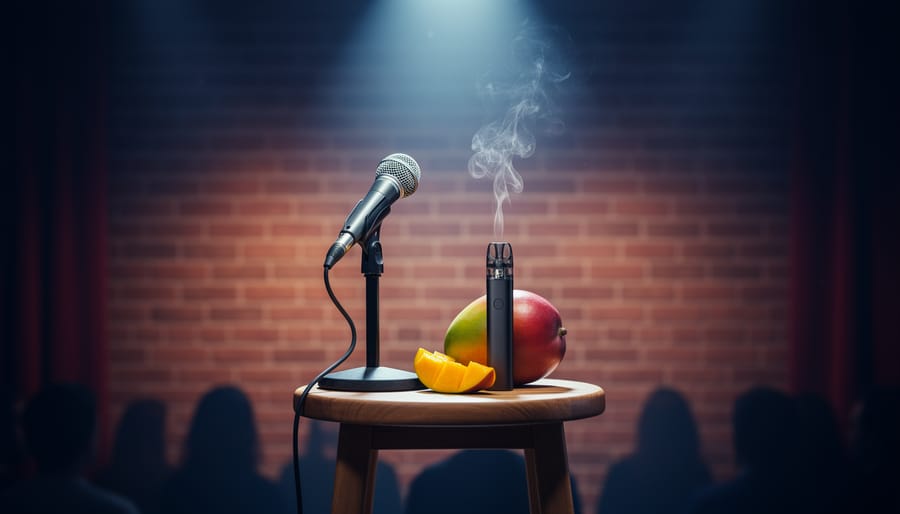
Canadian stand-up comedians have discovered comedy gold in the most unexpected place: the absurdly specific world of mango vape juice. This bizarre intersection of tropical fruit flavoring and nicotine delivery systems has spawned countless bits, crowd work moments, and viral comedy clips that resonate far beyond the vaping community itself.
The phenomenon taps into something quintessentially Canadian—finding humor in the mundane contradictions of modern life. Picture someone bundling up in -30°C Winnipeg weather, stepping outside for a “mango-flavored tropical getaway,” only to return smelling like fruit candy and regret. It’s the perfect storm of irony that comedy thrives on.
Comics from Vancouver to Halifax have weaponized mango vaping references to explore themes of failed attempts at sophistication, the disconnect between marketing promises and reality, and our collective willingness to believe that inhaling artificial mango constitutes a lifestyle choice. The material works because it’s simultaneously specific and universal—not everyone vapes, but everyone understands the comedy in desperately seeking tropical escapism through questionable means.
This exploration examines why Canadian comedians have latched onto this peculiar subject matter, showcases the best bits that have emerged from comedy clubs nationwide, and reveals how a simple e-liquid flavor became an unexpected staple of contemporary Canadian stand-up comedy.
The Mango Vape Phenomenon on Canadian Comedy Stages

From Punchline to Running Gag
The mango e-liquid phenomenon didn’t explode overnight in Canadian comedy. It started quietly, around 2018, when Toronto-based comedian Marcus Chen made an offhand observation during his set about how every vape shop seemed to be staffed by someone who could describe mango flavors with the intensity of a sommelier. The bit landed surprisingly well, and within weeks, other performers at Toronto comedy clubs began adding their own mango vape riffs to their material.
What made this reference stick wasn’t just the absurdity of tropical fruit meeting nicotine delivery systems. It tapped into something distinctly Canadian: the irony of choosing mango flavor while standing in minus-twenty-degree weather. Vancouver’s Sarah Mitchell picked up the thread in 2019, building a routine around asking vape shop employees if they carried “seasonal flavors” like pumpkin spice mango.
The real turning point came when Montreal comedian Antoine Dubois incorporated the callback during a nationally televised festival set. His observation that mango vape clouds were becoming Canada’s unofficial summer scent resonated across provincial lines. Soon, open mic performers from Halifax to Victoria were testing their own mango variations.
By 2020, the reference had achieved running gag status. Comedians could simply mention mango e-liquid and audiences would laugh in recognition, understanding the shared cultural touchpoint. The joke had evolved beyond its original premise into a comedy shorthand.
The Tropical Irony Factor
Picture this: You’re huddled in a Winnipeg apartment in February, windchill warning blaring on your phone, three layers of thermal underwear doing their best impression of insulation, and you’re vaping tropical mango flavoring. If that doesn’t sound like the setup to a Canadian comedy bit, what does?
This absurd disconnect between our frozen reality and the promise of tropical paradise has become rich territory for comedians across the country. There’s something genuinely hilarious about Canadians pretending we’re somewhere warm while our car won’t start and our nostrils freeze shut the moment we step outside.
Comedy veterans have latched onto this specific irony. The image of someone standing outside a Toronto comedy club in a parka, exhaling mango-scented vapor clouds into minus-twenty air, perfectly captures our national ability to dream of warmer climates while embracing our arctic existence. It’s peak Canadian contradiction – we know we live where the air hurts our face, yet we’ll literally breathe in manufactured sunshine.
The joke writes itself, really. We can’t grow mangoes here, can barely grow tomatoes reliably in most provinces, but we’ll absolutely convince ourselves we’re experiencing tropical vibes through flavored vapor. Comedians use this as a jumping-off point to explore broader themes about Canadian optimism, our relationship with winter, and the creative ways we cope with living in what one comic described as “the world’s largest walk-in freezer with excellent healthcare.”

Breaking Down the Mango E-Liquid Flavor Profile (Through a Comedy Lens)
Sweet, Fruity, and Strangely Artificial
Canadian comedians have found comedy gold in describing mango vape flavor because it exists in this bizarre twilight zone between real and artificial. It’s somehow both too accurate and not accurate at all, which creates the perfect storm for observational humor.
Take the typical set-up: a comedian will take a puff during their bit and pause dramatically. “It tastes like a mango,” they’ll say, squinting suspiciously, “but like, a mango that went to business school. It’s got ambition. It’s a mango with a LinkedIn profile.” The audience gets it immediately because we’ve all experienced that uncanny valley of flavor that’s recognizable yet distinctly laboratory-born.
The challenge comedians face is making the ineffable somehow relatable. How do you explain that something tastes like the memory of a mango rather than an actual mango? Some compare it to what an alien might create if you described tropical fruit over a bad phone connection. Others suggest it’s what mangoes taste like in the metaverse.
What makes this material work so well is the shared experience. Even non-vapers understand artificial fruit flavoring from candies and popsicles. Comedians tap into our collective confusion about why we accept these approximations as satisfying substitutes. The humor isn’t mean-spirited; it’s genuinely curious about our relationship with synthetic experiences that promise authenticity while delivering something entertainingly other.
The ‘Too Tropical’ Problem
Canadian comics have zeroed in on a hilarious truth: mango e-liquid doesn’t taste like eating a mango so much as being attacked by the abstract concept of mango. It’s mango turned up to eleven, stripped of all subtlety and nuance.
The disconnect provides endless material. Comedians riff on how actual mangos require work—there’s the peeling, the fibrous bits stuck in your teeth, the juice running down your arms. Mango vape? It’s like someone extracted the essence of “tropical vacation brochure” and crammed it into a cartridge. One comic memorably described it as “what a mango would taste like if it went to business school and got really aggressive about personal branding.”
The intensity factor resonates because it’s universally relatable, even for non-vapers. Everyone’s encountered that overly artificial fruit flavor—the kind that makes you question whether the manufacturers have ever seen actual fruit. Comics joke about mango e-liquid tasting less like the fruit and more like what aliens might create if humans could only describe mangos through interpretive dance.
This exaggerated tropical assault becomes a perfect metaphor for modern excess, allowing comedians to explore themes of authenticity versus artificiality while keeping audiences laughing at the absurdity of our flavor-enhanced world.
Notable Canadian Comedy Bits Featuring Mango Vapes
Cross-Country Perspectives
From coast to coast, Canadian comedians have discovered that mango vape humor hits differently depending on where you’re performing. Vancouver comics, surrounded by health-conscious culture and dispensary-adjacent vape shops, tend to lean into wellness satire, joking about how mango e-liquid is somehow both a guilty pleasure and a yoga studio accessory. Their material often plays with the contradiction of chasing organic smoothies with artificial fruit clouds.
Montreal’s bilingual comedy scene adds linguistic layers to the mix, with performers riffing on how “mangue” sounds fancier than it tastes and exploring the absurdity of Quebec’s distinct vaping regulations. The city’s rich tradition of observational humor translates beautifully to dissecting why mango became the default flavor choice at every dep.
Toronto comedians, working in Canada’s largest market, approach mango vape material with urban sophistication, weaving it into broader discussions about millennial habits and the gentrification of smoking. Meanwhile, Maritime performers from Halifax bring their signature self-deprecating charm to the topic, crafting relatable bits about buying discount mango pods at corner stores during brutal winters.
What unites these regional approaches is a shared understanding that vaping culture, like comedy itself, thrives on finding humor in everyday absurdities. Whether the punchline lands in English, French, or Newfoundland slang, mango vape jokes demonstrate how local flavor enhances universal comedic themes.
The Generation Gap Angle
The comedy stage has become an unexpected forum for exploring how different generations relate to vaping culture, with mango e-liquid serving as the perfect symbol of this divide. Younger Canadian comedians often embrace mango vaping references as shorthand for their generation’s quirks, while veterans use the same topic to highlight just how much has changed since their comedy career began.
Comics in their twenties and thirties frequently joke about mango vape pods being as essential to their demographic as Tim Hortons double-doubles were to previous generations. They mine humor from the absurdity of gathering around parking lots for a collective mango-scented cloud break, transforming what might have been cigarette culture into something fruitier and less rebellious. The shared experience resonates with audiences who recognize themselves in these observations.
Meanwhile, established comedians who came up in the eighties and nineties approach mango vaping from an outsider’s perspective, expressing bewilderment at trading actual mangoes for artificial versions. Their routines often contrast their own coming-of-age rituals with today’s fruit-flavored vapor gatherings, creating comedy gold from the genuine confusion of watching younger performers debate mango versus peach flavors with the same intensity they once reserved for hockey debates.
This generational lens doesn’t create division but rather builds bridges through laughter. Comedy rooms across Canada feature lineups where a veteran comic’s mango vaping confusion perfectly sets up a younger performer’s defense of their generation’s choices, creating a collaborative comedy experience that celebrates rather than mocks our evolving social landscape.
Why This Oddly Specific Topic Resonates with Audiences
The brilliance of Canadian comedians riffing on mango e-liquid flavors lies in the universal comedy principles that make seemingly niche topics connect with broader audiences. At its core, this material succeeds because it taps into observational humor about everyday modern life. Most people have encountered vape shops or noticed the peculiar specificity of flavor names, even if they’ve never vaped themselves. When a comedian describes mango e-liquid as tasting like a tropical vacation filtered through a USB port, audiences recognize the absurdity of our contemporary world.
The relatability factor extends beyond the product itself. Comedians excel at highlighting the disconnect between marketing promises and reality, a theme everyone understands. The description of a vaping flavor as “exotic mango paradise” when it tastes more like “regret with a hint of fruit” resonates because we’ve all experienced products that overpromise and underdeliver. This is fundamentally what makes audiences laugh across different backgrounds and experiences.
There’s also sharp cultural commentary embedded in these routines. Canadian comedians often approach topics with a self-aware perspective that examines how we’ve arrived at a place where purchasing “Mystical Mango Madness” vape juice seems normal. This material touches on generational differences, consumer culture, and the peculiar ways modern society packages and sells experiences. The specificity of mango flavor becomes a gateway to discussing larger themes about authenticity, wellness trends, and our relationship with technology.
The collaborative nature of Canadian comedy means these observations get refined through workshop settings and feedback loops. When one comedian explores mango e-liquid territory and gets laughs, others build on the premise, finding new angles. This collective development ensures the material stays fresh while maintaining accessibility. The topic works because it’s specific enough to feel original yet universal enough that audiences immediately grasp the references, creating that perfect sweet spot where comedy thrives.
The Collaborative Comedy Connection
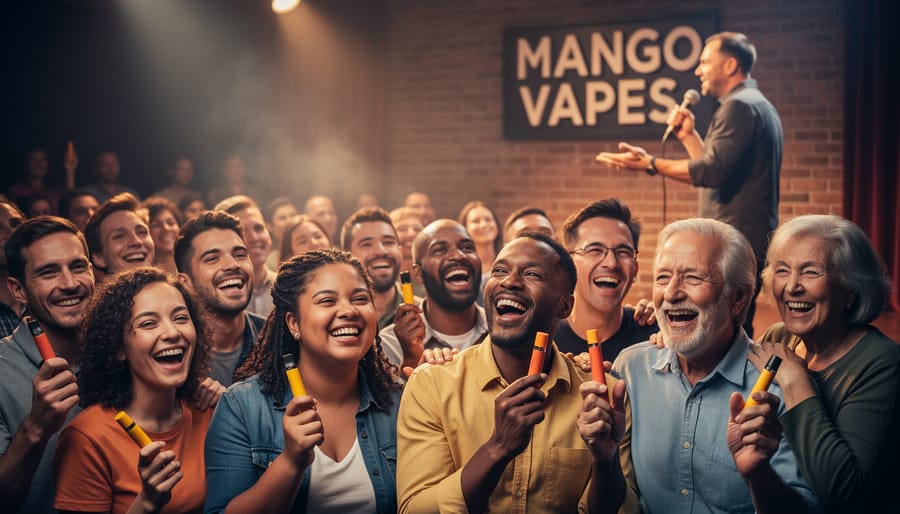
In the Canadian comedy scene, there’s an unspoken tradition of building on each other’s material rather than competing for ownership. This collaborative spirit shines particularly bright when it comes to mango vape observations, where one comic’s bit about tropical fruit clouds often inspires another’s take on convenience store encounters.
Toronto comic Sarah Chen might open with a premise about the disconnect between mango vape’s exotic promise and the fluorescent reality of a gas station parking lot. Within weeks, Vancouver’s Mike Patterson adds his perspective on how mango e-liquid represents the closest some Canadians get to tropical fruit outside canned cocktails. Rather than copying, they’re contributing to a shared comedy language that audiences across the country recognize and appreciate.
This collaborative approach strengthens Canadian comedy identity by creating regional variations on universal themes. An Edmonton performer might focus on vaping mango during minus-thirty weather, while a Halifax comic explores the maritime absurdity of artificial tropical flavors by the Atlantic. Each perspective adds depth to the collective material without diminishing individual voices.
Open mics and comedy festivals facilitate this exchange, where comics freely discuss their approaches to vape humor. Workshop sessions often feature discussions about finding fresh angles on popular topics, with mango e-liquid serving as a perfect case study in collaborative innovation. Comics share what worked, what flopped, and what observations remain untapped.
Social media amplifies this connection, with Canadian comics posting their mango vape sets and tagging peers for feedback. This transparency builds trust and community, distinguishing Canadian comedy from more competitive markets. The result is stronger material that benefits everyone, as audiences enjoy increasingly sophisticated takes on seemingly simple subjects like artificial mango clouds drifting through Tim Hortons parking lots nationwide.
Who knew that mango e-liquid could become a comedic goldmine? This peculiar intersection reveals something essential about Canadian comedy: our performers possess an incredible talent for transforming the mundane into memorable moments. Whether it’s comparing vaping culture to hockey rituals or dissecting the absurdity of tropical fruit flavors in a country that experiences eight months of winter, Canadian comedians demonstrate that humor lives everywhere, even in the most unexpected places.
This quirky topic showcases how comedy builds bridges between diverse communities. Stand-up artists observing someone vaping mango-flavored clouds at a Tim Hortons create shared experiences that resonate across the country. These observations become inside jokes that unite audiences, reminding us that laughter flourishes when we recognize ourselves in these everyday absurdities.
The best way to experience this magic firsthand is by attending live comedy shows. There’s nothing quite like hearing a comedian riff on mango e-liquids or any other bizarre observation in real-time, surrounded by fellow audience members who appreciate the beautiful ridiculousness of it all. Support your local comedy scene, catch those spontaneous moments of brilliance, and discover what other unexpected topics Canadian comedians will transform into comedy gold next.